






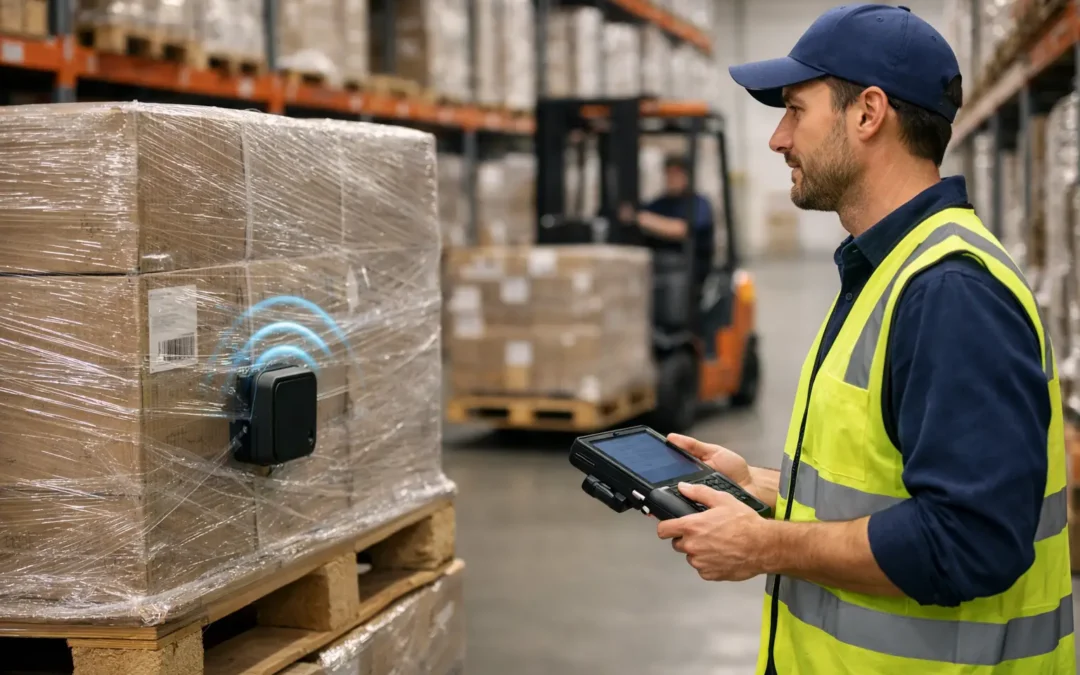
A pallet sitting in the wrong bay can look like available stock until a picker, planner or customer proves otherwise. That is the operational risk pallet traceability is designed to remove. By recording each pallet’s identity, contents, status and movement in real time, warehouse teams can answer a simple but critical question: what is on this pallet, where is it now, and what has happened to it?
For manufacturers, wholesalers and distributors, the value goes beyond a tidier stock record. Accurate pallet-level control reduces search time, prevents unsuitable stock being dispatched, supports faster recalls and gives managers a reliable view of available inventory across the operation.
What pallet traceability means in practice
Pallet traceability is the ability to follow a specific handling unit through its full warehouse journey. A pallet is given a unique identity, typically through a barcode label and serial shipping container code, then scanned as it is received, put away, replenished, picked, loaded, transferred or returned.
The pallet record should hold more than a pallet number. It may include the SKU or SKUs it contains, quantity, batch or lot, serial numbers where required, supplier, receipt date, best-before date, quality status, weight, dimensions and its current location. The level of detail depends on the product and the risk involved. A warehouse handling ambient consumables has different requirements from one managing regulated goods, high-value components or date-sensitive stock.
The key distinction is between stock visibility and pallet-level certainty. Knowing that 500 cases are in the building is useful. Knowing that 120 of those cases, from batch A, are quarantined on pallet 000184 in a defined hold area is what allows the operation to act with confidence.
Why pallet traceability matters to warehouse performance
Warehouse errors often begin with ambiguity. A pallet may have been moved without a scan, mixed with another batch, put into a temporary location or loaded to the wrong route. Once the digital record no longer matches the physical operation, teams compensate with manual checks, spreadsheet investigations and stock searches.
A properly configured WMS turns movements into controlled transactions. The operative scans the pallet and the location. The system confirms whether the movement is permitted, updates the stock position immediately and creates an audit trail. That control supports day-to-day efficiency as much as it supports compliance.
For example, a warehouse manager can direct replenishment from the correct pallet based on FIFO, FEFO, batch rules or customer-specific requirements. Pickers are not asked to make a judgement on the warehouse floor. They receive a verified task through a rugged handheld device, with the location and pallet validation built into the workflow.
This has a direct effect on several operational measures: inventory accuracy, pick accuracy, order cycle time, labour productivity and the time required to investigate discrepancies. It also reduces the risk of dispatching stock that is expired, damaged, on quality hold or allocated elsewhere.
Recalls become targeted rather than disruptive
When a supplier identifies a batch issue, the first question is rarely whether the business has any affected product. The question is where every affected unit has gone. Without pallet traceability, a recall can require broad stock checks, paused dispatches and a great deal of manual reconciliation.
With accurate records, teams can identify affected pallets in stock, locate them physically, block them from allocation and establish which customer orders received the same batch. The result is a more controlled response with less unnecessary disruption to unaffected stock and customers.
The five movements that must be captured
Traceability is only as strong as the transactions recorded at the point of work. Most warehouse operations need a clear digital record of these events:
- receipt against the expected delivery, including quantity, condition and batch data;
- put-away into a validated location, including any quality or quarantine status;
- internal transfers, replenishments and consolidation moves;
- picking and despatch confirmation against the order, route or vehicle load; and
- returns, damage, rework or disposal, so stock does not quietly re-enter available inventory.
The requirement is not to scan every action simply for the sake of it. Excessive transactions slow work down and encourage workarounds. The right design captures each decision point where a wrong product, wrong location, wrong batch or wrong status could create a service, financial or compliance issue.
Barcode or RFID: choose the control that fits
Barcode scanning remains the practical choice for many UK warehouses. Labels are cost-effective, reliable when printed well and easy to deploy on standard pallets. Combined with handheld mobile computers and disciplined processes, barcode-led pallet traceability provides strong control without major changes to the physical environment.
RFID can be valuable where pallets move quickly through fixed points, where hands-free capture is required or where the cost of missed scans is particularly high. It can automate movement confirmation at dock doors, production interfaces or defined zones. However, RFID requires careful site assessment. Metal, liquids, tag placement, reader positioning and process exceptions can all affect performance. It also brings higher infrastructure and tag costs.
For many businesses, the best answer is not barcode versus RFID across the entire estate. It is barcode as the primary operating method, with RFID applied to high-volume or high-risk process points where the additional automation has a clear return.
Designing pallet traceability around real workflows
Technology will not fix an unclear process. Before configuring pallet control, teams should map how stock actually moves, including the exceptions that rarely appear in formal process diagrams. Where are pallets held while checks are completed? Who can move stock into quarantine? What happens when a full pallet is split? Can mixed pallets be created, and if so, how are they labelled and verified?
These details determine whether the system reflects the warehouse or merely describes an idealised version of it. A practical process and gap analysis should also establish the required traceability granularity. Some operations need full pallet tracking only. Others need case-level identification within a pallet, serial-number capture, catch-weight control or attribute-based allocation.
Rules should then be configured to remove avoidable decisions. A WMS can prevent allocation of blocked stock, enforce batch rotation, direct pallet put-away by capacity or compatibility, and require scan confirmation before a load is closed. The aim is total operational control without making routine work difficult for the people doing it.
Integration keeps the record commercially useful
Pallet data becomes far more useful when the warehouse system is connected to the ERP platform and transport processes. Orders, receipts, stock adjustments and product attributes should move between systems without rekeying. When despatch is confirmed at pallet level, customer service and finance teams receive a more dependable picture of what has physically left the site.
Integration also matters for planning. Accurate pallet dimensions, weights and handling characteristics can support better vehicle loading decisions and help dispatch teams confirm that the correct freight is assigned to the correct lorry. The warehouse record and transport record should support each other rather than create competing versions of the truth.
Common failure points to avoid
The most common mistake is treating labels as the traceability solution. A label only identifies a pallet if it is unique, readable, durable and linked to the correct data. Poor print quality, duplicate identifiers and handwritten replacement labels quickly undermine confidence.
Another failure point is allowing uncontrolled off-system movement. Teams often move a pallet ‘just temporarily’ to clear a gangway, deal with congestion or prepare a late order. If the move is not captured, the next user loses trust in location data. Temporary locations should therefore exist in the WMS and follow the same validation rules as permanent bays.
Finally, avoid making exception handling invisible. Damaged pallets, short receipts, quality holds and partial picks are normal warehouse events. The process needs a quick, controlled way to record them. If staff have to find a supervisor, complete a paper form and wait for an adjustment, they will understandably look for a faster route.
Turning data into better decisions
Once pallet movements are reliable, managers can look beyond stock accuracy. They can identify how long pallets remain in receiving, where replenishment demand is concentrated, which locations create excessive travel, how often stock is moved without adding value and where damage occurs.
This is where pallet traceability becomes a performance tool rather than a compliance task. Live warehouse data can expose bottlenecks before they become missed cut-offs, support more realistic labour planning and show whether layout changes are improving flow. It also gives operational leaders evidence for decisions that might otherwise rely on anecdote.
The best starting point is usually one defined flow, such as inbound receipt to put-away or finished goods through despatch. Make pallet identity, status and location dependable there first. Once warehouse teams trust the data because it matches what they can see on the floor, better control stops feeling like extra administration and starts making every shift easier to run.