






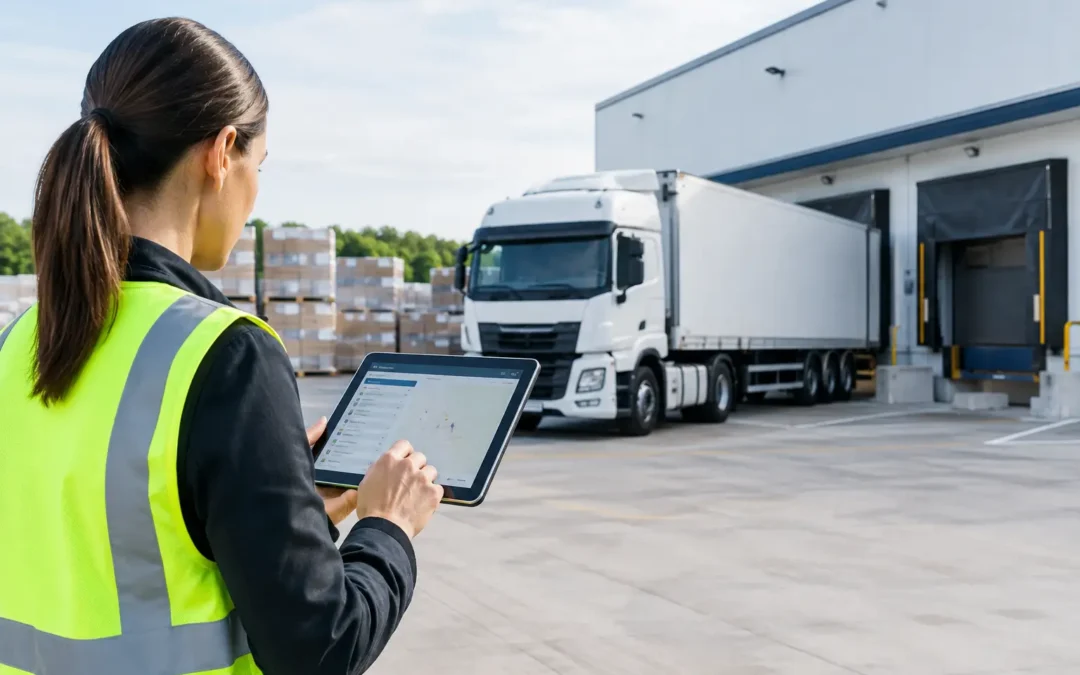
A lorry can arrive on time and still lose an hour before a wheel turns at the loading bay. The problem is rarely a lack of doors. It is usually a lack of live control over arrivals, queues, trailer locations and loading priorities. Yard management software warehouse teams can use as a real-time control tower replaces radio calls, paper logs and assumptions with a clear operating picture from gatehouse to dock.
For busy distribution sites, the yard is not a space between the road and the warehouse. It is a critical part of the fulfilment operation. When it is unmanaged, late departures, congestion, missed collections and frustrated drivers quickly affect customer service and transport cost.
Why the yard becomes a warehouse bottleneck
Warehouse teams often measure pick rates, order accuracy and dispatch performance closely, while the yard remains dependent on whiteboards, spreadsheets or a guardhouse notebook. That disconnect creates avoidable uncertainty. The warehouse may have an outbound load ready, but no free door. A carrier may be waiting at the gate while a suitable bay sits unused. A shunter may spend valuable time looking for a trailer rather than moving it.
These issues become more pronounced where a site handles mixed inbound and outbound activity, multiple carriers, temperature-controlled stock, high-value goods or time-sensitive collections. A missed slot can cause a queue. The queue constrains vehicle movements. The constraint then reaches the warehouse floor, where supervisors have to alter labour plans and dispatch priorities at short notice.
The operational cost is not limited to detention charges. Poor yard visibility can create safety risks, wasted fuel, unnecessary idling, overtime and difficult conversations with customers when a promised delivery misses its cut-off.
What yard management software does
Yard management software coordinates the movement of vehicles, trailers, drivers and dock doors across a site. Think of it as air traffic control for the yard and dock gates: every arrival has a status, every movement has an instruction, and the team can see what requires attention next.
A capable platform records appointments before a vehicle arrives, manages check-in at the gate, directs vehicles to parking areas or bays, tracks loading and unloading status, and supports controlled check-out. Instead of phoning the warehouse to ask whether a door is available, gatehouse and transport teams work from the same live information.
This is not simply a vehicle booking system. Booking is the starting point. Yard management adds the execution layer: who has arrived, whether they are early or late, what they are carrying, where they should wait, when they can approach a door, and whether the work is complete.
From arrival to departure: a controlled workflow
Consider an inbound delivery arriving during a busy morning period. The driver checks in using a kiosk, mobile process or gatehouse operator. The system verifies the booking, captures vehicle and trailer details, and applies site-specific requirements such as safety induction, load type or temperature checks.
The warehouse team can see the arrival immediately. When the planned dock door becomes available, the driver or shunter receives an instruction. The vehicle is moved, unloading begins, and the status changes in real time. Once the receiving task is complete, the vehicle is released and departure time is recorded.
The same logic supports outbound work. A dispatch supervisor can identify which loads are ready, which vehicles are present, which doors are occupied and which carrier collections are at risk. Decisions are based on current conditions rather than a plan created several hours earlier.
The operational gains that matter
The strongest case for yard management software is not that it digitises a paper process. It gives operations leaders more control over the constraints that affect throughput.
Faster turns without unsafe rushing
Vehicle turnaround time is an obvious measure, but speed should not come at the expense of safety or process discipline. A well-configured yard workflow reduces waiting caused by unclear instructions and prevents vehicles from moving to unsuitable areas. Drivers receive consistent direction, and the site has an auditable record of entry, movement and exit.
The result is a more predictable turn. That matters when carrier capacity is tight or when a late collection could push work into the next shift.
Better dock-door utilisation
Dock doors are expensive, finite assets. Yet many sites allocate them through informal knowledge: who is shouting loudest, which driver arrived first, or what the supervisor believes is happening. Live visibility allows doors to be assigned according to operational priority, load type, planned duration and readiness.
This does not mean every site needs complex optimisation rules. Smaller yards may benefit most from simple appointment visibility and a disciplined check-in process. Larger, high-volume operations may need dynamic door allocation, queue management and detailed dwell reporting. The right level depends on traffic volume, yard layout and the cost of delay.
Fewer manual calls and fewer blind spots
Radio traffic and telephone calls will always have a place in a live operation. They should not be the system of record. When key updates sit in people’s heads or on paper, shift handovers become fragile and exceptions are difficult to investigate.
A shared yard view gives gatehouse staff, warehouse supervisors and transport planners the same operational facts. It reduces repetitive status-chasing and makes it easier to spot problems before they become missed departures.
Clearer accountability and performance data
Without timestamps, it is difficult to distinguish a carrier delay from a warehouse delay. Yard software provides evidence: booked arrival time, actual arrival, time waiting, bay allocation, loading start, loading completion and departure.
That data supports practical improvement discussions. If certain appointments regularly arrive early, booking rules may need adjustment. If vehicles wait too long after loading is complete, the release process may need attention. If one dock door has persistent delays, the underlying cause can be investigated rather than guessed.
Where warehouse and yard data should connect
A yard should not operate as an isolated island. Its value increases when it connects to the systems that plan and execute warehouse and transport activity.
Integration with a warehouse management system can show whether inbound receipts are ready to process, whether outbound orders have been picked, and whether a load is genuinely ready for collection. Integration with transport management can align planned collections, carrier information and delivery priorities. Connection to ERP platforms such as Sage Intacct, SAP Business One, Microsoft Dynamics or Acumatica removes duplicate entry and keeps the wider business informed without relying on manual updates.
The practical objective is one operational truth, not integration for its own sake. If a load is delayed, the right people should see it early enough to act. If a vehicle has checked in, warehouse labour planning should reflect that reality.
Choosing yard management software for a warehouse
The best solution will match the site’s operating model rather than force teams into a generic process. Start with the questions that reveal where control is being lost.
How are appointments booked and changed? Who knows where each trailer is? Can the team see which dock doors are occupied and why? How are drivers instructed? Can the operation prove when a vehicle was ready, delayed and released? If the answers rely on radio calls, personal knowledge or multiple spreadsheets, the opportunity is clear.
Look closely at usability too. Gatehouse teams and yard marshals need a clear interface that supports fast decisions under pressure. The system should handle exceptions, not just ideal bookings. Late arrivals, unplanned vehicles, vehicle swaps, rejected loads and blocked doors are normal operating conditions.
Implementation deserves equal attention. Yard processes touch security, health and safety, transport, warehouse operations and IT. A useful deployment begins with a walkthrough of actual vehicle flows, pedestrian routes, holding areas, dock-door rules and escalation points. Configuration should reflect how the site works while challenging habits that create delay or risk.
Smarter Warehouse delivers yard management capability with Mobiledock, combining specialist operational consultancy with a platform designed to bring order to busy gates, docks and vehicle movements. The focus is practical: make the next action visible, reduce avoidable waiting and give teams the information to keep freight moving.
Start with the decisions your team cannot make quickly
A yard transformation does not begin with a screen or a booking form. It begins by identifying the moments when a supervisor has to ask, “Where is that vehicle?”, “Which bay is free?” or “Is that load ready?” Those are the decisions that delay the operation.
When the yard provides reliable answers in real time, the warehouse can plan with greater confidence, drivers receive clearer direction, and every dock door has a better chance of contributing to the day’s dispatch performance.