
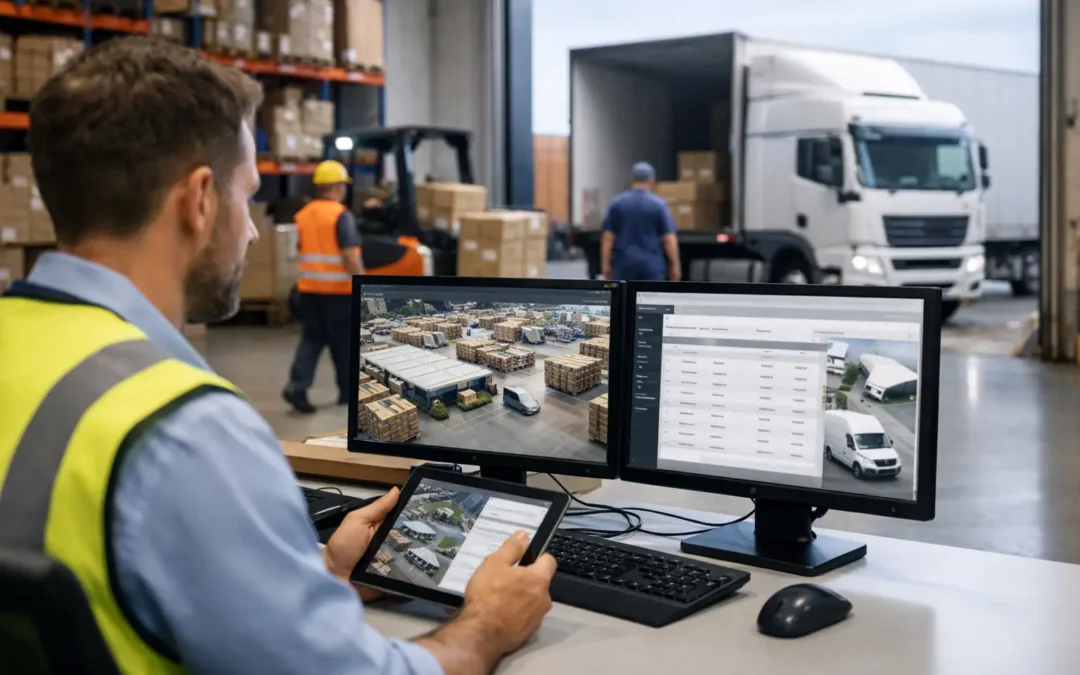
A delivery promise can be lost long before a vehicle leaves the yard. It happens when warehouse staff are picking against one set of priorities, transport planners are working from another, and customer service is chasing updates across spreadsheets, inboxes and disconnected systems. Integrated warehouse transport software brings those decisions into one operational flow, so stock, labour, loading and delivery plans are working from the same live information.
For UK manufacturers, wholesalers, distributors and retailers, this is not simply a technology decision. It is a way to reduce avoidable handling, make better use of vehicles and give customers reliable answers without asking teams to reconcile data manually.
Why disconnected warehouse and transport processes cost more
A warehouse management system can direct receiving, putaway, replenishment and picking with considerable precision. A transport management system can select carriers, build routes and manage deliveries. Both are valuable independently. The friction appears at the hand-off.
If transport planning starts only after orders are picked and staged, planners may inherit a poor mix of loads, late changes and unnecessary part-load movements. Equally, if the warehouse does not see the planned delivery sequence, teams can pick urgent orders in the wrong order, fill staging areas too early or delay a vehicle that is ready to depart.
The result is familiar: extra forklift travel, rushed loading, paperwork corrections, missed cut-offs and customer service teams spending time locating orders. These are not always dramatic failures. More often, they are small daily losses that suppress throughput and make performance harder to improve.
A connected approach creates a shared operational picture. The warehouse knows what must be picked, when it is required and how it will travel. Transport knows what stock is available, what is being picked, what has been packed and whether the load is genuinely ready. The ERP remains the commercial system of record, while warehouse and transport activity is executed with the control and detail the operation requires.
What integrated warehouse transport software should do
The value lies in more than placing WMS and TMS functions on the same screen. Effective integration must pass useful, timely information between warehouse and transport workflows, without creating duplicate data or forcing staff to rekey updates.
Plan orders around delivery reality
Orders should be visible to transport planning before the loading bay becomes a bottleneck. Planners can group deliveries by geography, service level, carrier rules, vehicle capacity and promised delivery date. Warehouse teams can then receive work in a sequence that supports the actual dispatch plan.
This matters particularly where order profiles vary. A distributor handling a mixture of pallets, cases and individual items needs different picking and loading discipline from a manufacturer dispatching high-volume finished goods. The system should support the operation rather than impose an ecommerce-led workflow that does not reflect the physical work.
Connect picking, staging and loading
Wave picking is more useful when it reflects vehicle departure times, route priority and dock availability. Once a wave is released, handheld workflows can direct operators through the right tasks, validate stock movements and provide live status to supervisors.
At staging, the system should identify what belongs to each route or vehicle, flag missing items and reduce the risk of a completed order being loaded onto the wrong lorry. This creates a controlled chain from pick confirmation to proof that the right goods were dispatched in the right consignment.
Improve vehicle utilisation before the doors close
Vehicle capacity is not just a question of weight. Pallet dimensions, stackability, loading order, delivery sequence and vehicle constraints all affect what can be carried safely and efficiently. 3D load planning gives planners a practical view of how consignments fit, helping them avoid wasted space and loading plans that look acceptable on paper but fail on the warehouse floor.
There are trade-offs. Maximising fill can conflict with a delivery route that needs goods unloaded in a particular order. A good transport plan balances utilisation, handling time, service commitments and the cost of an additional vehicle. The right answer depends on the operation’s priorities that day.
Integrated warehouse transport software in practice
Consider a multi-channel distributor with a morning cut-off for next-day regional deliveries. Orders arrive through its ERP and sales channels throughout the day. Rather than printing a generic pick list and sorting out transport afterwards, the integrated platform allocates orders against available stock, builds the proposed delivery plan and releases warehouse work according to departure windows.
Pickers use rugged mobile devices to confirm each movement. Exceptions such as short stock, damaged stock or an order hold are visible immediately, not discovered during loading. As goods reach staging, the transport plan updates with confirmed quantities and load status. The loading team sees the correct route, vehicle and sequence, while dispatch can produce the required documents and send accurate delivery information to customers.
That flow does not remove the need for operational judgement. A late priority order may still require a planner to adjust a route. A vehicle breakdown may force a rapid change of plan. The difference is that teams are responding with shared live data rather than making changes in isolation.
| Operational area | Disconnected process | Integrated process | |—|—|—| | Order status | Staff chase updates across systems | Live progress from release to dispatch | | Picking priority | Work is often sequenced by convenience | Waves reflect routes, cut-offs and capacity | | Loading | Manual checks and late surprises | Route-linked staging and load validation | | Vehicle use | Capacity assessed late or by judgement alone | Weight, cube and loading sequence considered early | | Exceptions | Problems surface through calls or paperwork | Shortages and holds trigger visible action |
The capabilities that make the difference
Not every operation needs every advanced function on day one. A single-site wholesaler may first focus on accurate stock, barcode-led picking and carrier connectivity. A multi-site operator may need yard management, RFID, complex replenishment rules, labour analytics and coordinated transfers from the outset. The important point is to select a platform that can grow without forcing a disruptive replacement when requirements become more demanding.
Look for real-time inventory and order visibility across locations, configurable wave and task management, pallet and location control, intelligent replenishment, carrier and last-mile connectivity, returns processing, and meaningful labour performance data. Transport functions should support route planning, carrier selection, delivery status, proof of delivery and 3D vehicle load planning where physical load design affects cost or service.
Open integration is equally important. Most mid-market businesses need warehouse and transport software to connect reliably with platforms such as Sage Intacct, SAP Business One, Microsoft Dynamics or Acumatica. The goal is not to replace the ERP’s financial and commercial role. It is to remove the delays and rekeying that occur when operational systems cannot exchange orders, stock updates, dispatch confirmations and delivery information properly.
Implementation is where value is won or lost
Software capability alone will not fix poorly defined processes. Before configuration begins, the operation needs a clear view of its current flows: how stock is received, where exceptions occur, how orders are prioritised, who changes delivery plans and what information each role needs to make decisions.
A proper process and gap analysis identifies what should be standardised, what genuinely needs configuration and where a process change will deliver more value than custom development. It also exposes practical requirements that are easy to miss in demonstrations, such as Wi-Fi coverage in specific zones, label formats, forklift-mounted devices, packing bench workflows or the timing of carrier manifest cut-offs.
Training should be role-based and carried out in realistic scenarios. A picker needs a fast, clear mobile workflow. A warehouse manager needs visibility of queues, bottlenecks and productivity. A transport planner needs confidence that the data supporting a load plan is current. These are different jobs, and a successful deployment respects that.
Smarter Warehouse approaches this as an operational transformation, combining the TBO4 WMS and TMS platform with UK-based consultancy, device deployment, training and post-go-live improvement. That hands-on support matters when a configuration decision affects the pace of work on the floor.
Start with the hand-offs that create friction
The strongest business case often starts with a small number of measurable failures: late vehicle departures, excess picking travel, poor load fill, stock adjustments, delivery queries or orders missing a carrier cut-off. Establish a baseline before implementation, then measure whether the new process reduces those losses.
The useful question is not whether warehouse and transport systems can be connected. It is where your operation currently loses control between an order being released and a customer receiving it. Start there, and build the workflow around the people, stock and vehicles that do the work every day.