
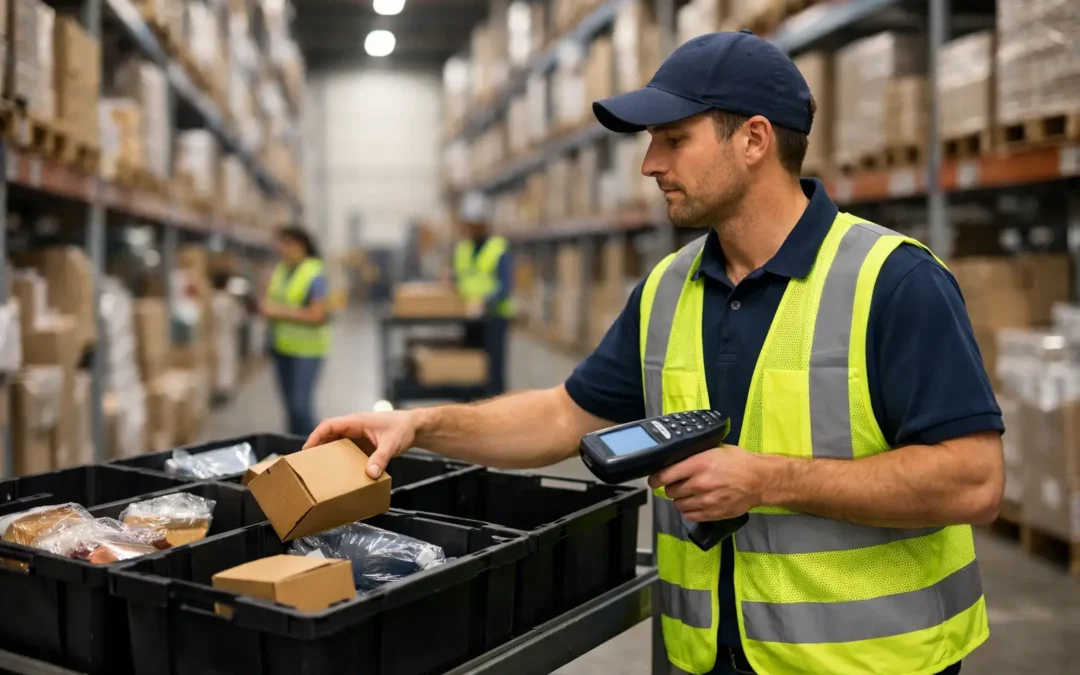
A busy warehouse can have enough orders to keep every picker moving, yet still miss dispatch cut-offs. The issue is often not effort or headcount. It is the order in which work reaches the floor. What is wave picking? It is a warehouse management method that releases a planned group of orders for picking at a defined time, using rules that reflect delivery schedules, stock location, labour availability and operational capacity.
Rather than allowing orders to arrive at pickers one at a time, a warehouse management system groups relevant work into a wave. The team can then pick, consolidate, pack and dispatch that work in a controlled sequence. Done well, wave picking reduces unnecessary travel, protects carrier deadlines and gives supervisors a clearer view of what the operation can realistically complete.
What is wave picking in practice?
A wave is a batch of orders selected according to operational rules. Those rules might include a carrier collection time, a delivery route, customer priority, product type, warehouse zone, temperature requirement or the availability of stock. The WMS creates or proposes the wave, validates that the orders can be fulfilled, and releases pick tasks to the appropriate people and devices.
For example, a distributor may have a 2 pm collection for orders travelling to Scotland and a later collection for local deliveries. Instead of asking the team to pick every order in the order it was received, the warehouse releases the Scotland orders as an early wave. Pickers work the relevant zones, orders are checked and packed, and the completed consignments are ready before the vehicle arrives.
The same principle applies in manufacturing stores. A wave can group component picks needed for a particular production run, helping the warehouse stage material without interrupting urgent despatch work. For multi-channel retailers, waves can separate click-and-collect orders, parcel orders and wholesale replenishment activity so each workflow receives the right handling.
Wave picking is not simply batch picking under another name. Batch picking usually refers to collecting stock for several orders during one pick journey. A wave is broader. It is the planned release of work, and it may use batch, cluster, zone, discrete or pallet picking within that release. The right method depends on the product range, order profile and physical layout.
Why warehouses use wave picking
The immediate benefit is control. Supervisors can align picking activity with the real constraints of the day rather than reacting to a constantly changing order queue. That matters when labour, packing benches, staging lanes, replenishment vehicles and carrier collections all have limited capacity.
Travel reduction is usually one of the strongest gains. When a WMS groups orders that draw stock from similar locations, a picker is less likely to cross the warehouse repeatedly for separate orders. The system can issue efficient routes, direct work by zone and create tasks that suit the available handling equipment. In a warehouse with long pick faces or several storage areas, those saved metres quickly become saved hours.
Wave planning also helps prevent bottlenecks moving downstream. Releasing every available order at once can overload packing stations and despatch lanes, even where picking itself is fast. Controlled waves allow the warehouse to match work released to what packing and transport can absorb. The result is a steadier flow, better use of labour and fewer late surprises at the loading bay.
Accuracy improves when the process is configured properly. Mobile barcode scanning can verify the picker, location, item, quantity and, where required, batch, serial number or expiry date. The wave tells the team what to do next; the scan-based workflow confirms that it was done correctly. That creates the traceability needed for controlled stock environments without relying on paper lists or memory.
How a WMS builds and releases a wave
An effective wave process begins with clean operational data. Orders must be available from the ERP or order management system, inventory must be accurate, and product master data must reflect the warehouse reality. If stock locations, units of measure or carrier service rules are unreliable, wave picking will expose those weaknesses rather than solve them.
The WMS then applies the chosen rules. A warehouse may schedule recurring waves at set intervals, such as hourly parcel waves, or create waves dynamically when order volume reaches a threshold. Some operations use a mix: planned waves for regular despatch activity and priority waves for genuine exceptions.
Before release, the system should check key conditions. Are all order lines allocated? Does the wave fit the available pick faces and staging capacity? Is replenishment required before picking starts? Can the selected orders meet their promised despatch date and carrier cut-off? These checks are where a specialist WMS turns planning into practical control.
Once released, tasks are assigned according to the warehouse design. A zone-picked wave might send ambient, bulky and secure-cage tasks to separate teams. Picked goods are then brought together at consolidation. In a batch or cluster process, one picker may collect items for multiple orders and separate them into totes or cartons using scan confirmation. For pallet orders, the wave can issue forklift tasks in a sequence that avoids unnecessary travel and congestion.
After picking, the WMS maintains visibility through checking, packing, labelling, staging and despatch confirmation. Managers can see whether a wave is on track, which zones are delayed, where exceptions sit and whether work needs to be reallocated. That live status is more useful than discovering a missed order when the carrier vehicle is already waiting.
Choosing the right wave rules
There is no single best wave design. A small operation with a narrow product range may benefit from simple carrier-based waves. A larger distributor may need rules that combine route, delivery date, customer service level, stock zone, order size and replenishment status. Complexity should earn its place. Rules that are too intricate can make exceptions harder to manage and reduce the flexibility supervisors need on a volatile day.
The most useful starting point is the operational constraint. If carrier cut-offs create pressure, build waves around despatch time. If picker travel is excessive, group work by location or zone. If packing is the constraint, limit each release to the capacity of available benches and staff. If urgent customer orders regularly disrupt planned work, define a clear priority-wave process rather than allowing every request to jump the queue.
Wave size requires care too. Larger waves can improve travel efficiency, but they create more work in progress and may delay the first completed orders. Smaller waves offer faster response and easier control, but can increase travel and administrative activity. The right balance depends on order volume, pick density, the number of active SKUs, cut-off times and the space available for staging.
Where wave picking can go wrong
Wave picking can make a poor process more visible, but it cannot compensate for inaccurate inventory or inadequate replenishment. Releasing a wave only to find that pick faces are empty creates avoidable exceptions, idle labour and rushed recovery work. Replenishment tasks must be visible and prioritised before they threaten a planned release.
It can also fail when managers treat the wave plan as fixed regardless of what happens on the floor. Equipment faults, absenteeism, late inbound deliveries and urgent orders are normal operational events. The WMS should provide structure, while supervisors retain the ability to hold, split, reprioritise or add work when the situation changes.
Another common issue is measuring only picks per hour. Faster picking has limited value if orders wait for consolidation, miss carrier cut-offs or create a despatch queue. Performance should be viewed across the whole flow: order release to pick completion, exception rate, pack throughput, despatch-on-time performance, travel distance and labour utilisation.
When wave picking is the right fit
Wave picking is particularly valuable where order volumes are high enough for timing and sequencing to matter, where several carrier or delivery commitments must be met, or where different product areas and handling methods need coordination. It is often a strong fit for wholesalers, manufacturers, retailers and distributors operating across multiple channels or sites.
It may be unnecessary for a very small warehouse with low daily order volumes, a single despatch deadline and straightforward picking routes. In that setting, simple real-time order picking could be easier to operate. Equally, a warehouse with highly unpredictable urgent demand may need a hybrid approach, reserving capacity for priority work rather than scheduling every task into fixed waves.
The value comes from designing the process around the operation, not forcing the operation to match software defaults. Smarter Warehouse approaches wave picking as part of a wider warehouse control model: accurate inventory, intelligent task allocation, mobile scanning, replenishment discipline and live performance data working together.
The best first step is to map one despatch day as it really runs – when orders arrive, where pickers travel, when queues form and which deadlines create pressure. Those facts will show whether wave picking should be simple, highly structured or combined with other picking methods, and they provide the baseline for a measurable improvement.